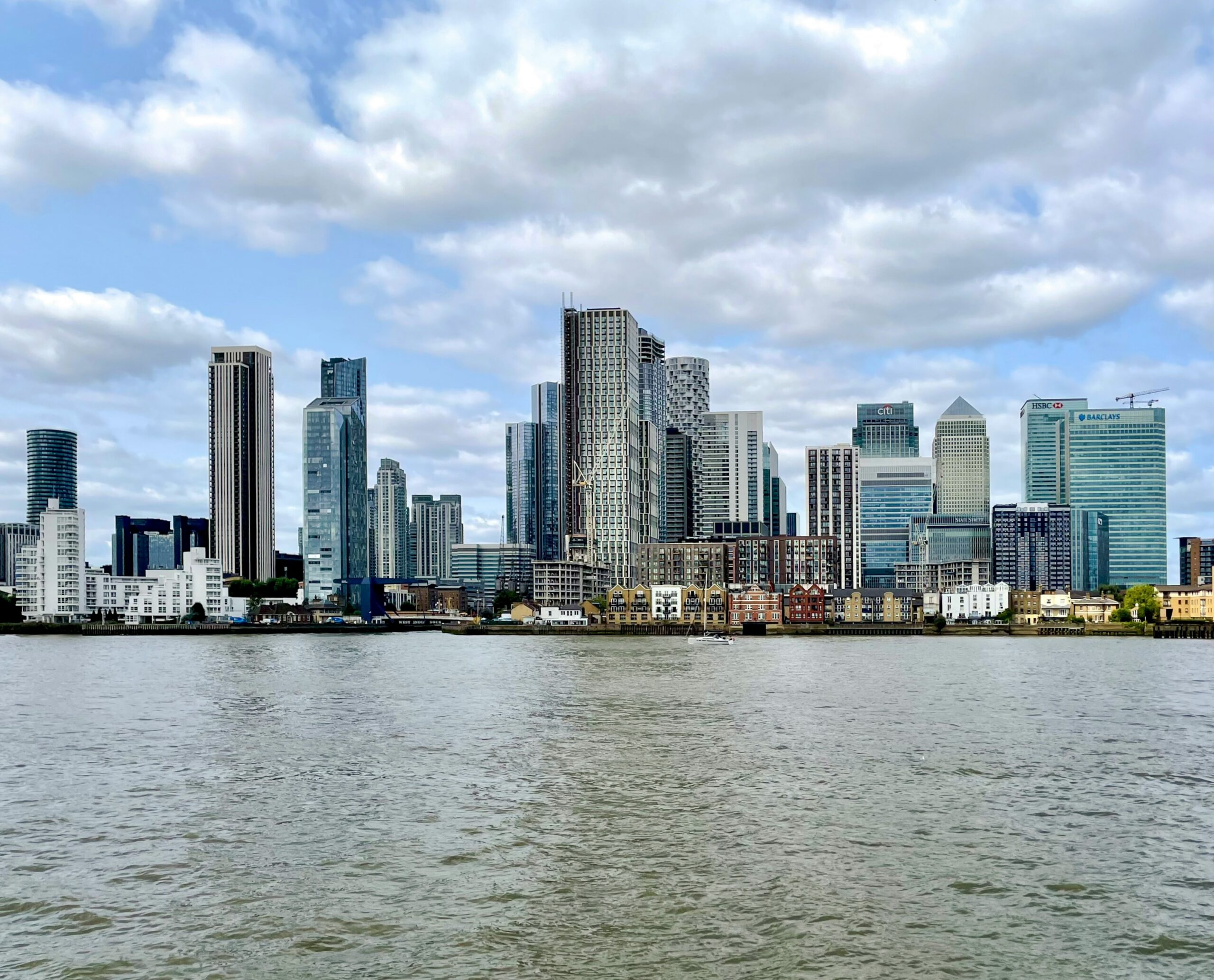
When you look at Canary Wharf today, you see a gleaming forest of glass and steel—a hyper-modern financial hub that dominates the East London skyline. It looks like a city built entirely for the future.
But if you look at it from the water, a completely different story emerges.
Long before the bankers and skyscrapers arrived, this loop of the River Thames was the beating, chaotic heart of the British Empire’s shipping trade. If you are planning a trip down the river on a Thames River Sightseeing cruise from Westminster to Greenwich, you will sail right past this architectural marvel. To help you appreciate the view from the deck, here are five incredibly strange, historic, and surprising facts about Canary Wharf that you won’t find in standard guidebooks.
1. It is Literally Named After Dogs (and Bananas)
You might assume “Canary Wharf” has something to do with little yellow birds. It doesn’t. The area gets its name from No. 32 berth of the West India Import Dock, built here in 1937 for Fruit Lines Ltd. They used the quay to unload a constant stream of ships importing tomatoes and bananas from the Canary Islands.
But the rabbit hole goes deeper: the Canary Islands themselves take their name from the Latin Islas Canarias, which translates directly to “Islands of the Dogs” (due to the large fierce dogs early explorers found there). So, Canary Wharf is technically “Dog Wharf,” located on the Isle of Dogs.
2. An Angry Swarm of Bees Once Protested Its Construction
The transition from derelict, closed-down shipping docks to a multi-billion-pound financial district in the late 1980s wasn’t completely smooth sailing. Local communities felt the massive Manhattan-style skyscrapers would ruin the area’s heritage.
During the official 1987 groundbreaking ceremony, local protestors decided to make their voices heard in the most creative way possible: they released a herd of sheep from nearby Mudchute Farm directly into the crowds of politicians and businessmen. If that wasn’t chaotic enough, they followed the sheep by releasing thousands of live bees.
3. The Main Tube Station is Big Enough to Swallow a Skyscraper
If you ever step off the riverboat to explore inland, you might find yourself using the Canary Wharf Underground station. Designed by legendary architect Norman Foster, it is an engineering masterpiece built entirely inside a drained, hollowed-out historic dock cocoon.
It is so vast that if you were to tip the iconic One Canada Square skyscraper (the pyramid-topped building that stands 235 metres tall) onto its side, it would fit entirely inside the underground station with room to spare.
4. Marine Life Has Stolen the Docks Back
When the commercial shipping docks closed in 1980, the water was heavily polluted. However, decades of intensive environmental cleanup have transformed the old West India Docks.
Because Canary Wharf is largely free from heavy road traffic and the automated DLR trains run quietly, the marine ecosystem has completely rebounded. The docks are now teeming with freshwater and saltwater fish, including flounder, plaice, and bream. If you keep your eyes peeled as you sail past the entrance channels, you might even spot the resident seals that regularly hunt for lunch in the North Dock.
5. The Best Way to See It is from 1802 Level
From the streets of Canary Wharf, you are trapped in a canyon of concrete. You completely lose the scale of how this massive citadel rises out of London’s ancient marshlands.
The absolute best way to experience it is from the water, looking up. When you sail past on a river cruise, you are sitting at the exact same water level that the majestic tall ships of the 19th century used when navigating the West India Docks. You can clearly spot where the historic low-rise brick warehouses end and the vertical walls of modern glass begin.
Experience the Moving Skyline
The transition from the historic majesty of Westminster, past the imposing Tower of London, and into the soaring modernism of Canary Wharf is one of the most visually stunning journeys you can take in the UK.
At Thames River Sightseeing, we’ve been guiding visitors along this historic highway for over half a century. Our Westminster Pier to Greenwich Pier cruises take you away from the claustrophobic underground tubes and put you out on the open-air deck, where local skippers share live, entertaining commentary about the sights shifting around you.
Whether you want to hop off at Greenwich to see the Cutty Sark or sit back for a full return journey to Westminster, you will get an uninterrupted, postcard-perfect view of Canary Wharf’s hidden history.
Ready to plan your day on the river?
See Canary Wharf from the water—get your Westminster to Greenwich tickets here!