If you’ve ever looked out at the River Thames from the deck of a boat, you’ve probably noticed that London’s history isn’t just built on its banks—it is carved into the very stone of the river walls. From mysterious stairs slipping beneath the water to industrial ironworks hidden in plain sight, the stretch of the river between Westminster and Greenwich holds centuries of hidden maritime secrets.
Next time you step aboard a Thames River Sightseeing cruise, head up to our open-air top deck, and use this guide to spot the historical relics hiding in plain sight.
1. The Wobbly Watermen’s Stairs
Where to spot them: Dotting the north and south banks, especially between Bankside and Butler’s Wharf.
Long before London was connected by dozens of modern bridges, the Thames was a bustling motorway of small wooden boats. These were rowed by the licensed members of the Company of Watermen and Lightermen (formally established in 1514), who acted as London’s original water taxi drivers.
To pick up and drop off passengers, they used designated stone steps cut directly into the river walls. Today, if you look closely at the banks near the Tate Modern (Bankside Pier) or Wapping, you can still see these moss-covered, tidal stone staircases disappearing into the water.
2. The Ghost Cranes of Shad Thames
Where to spot them: Just past Tower Bridge, immediately adjacent to Butler’s Wharf Pier.
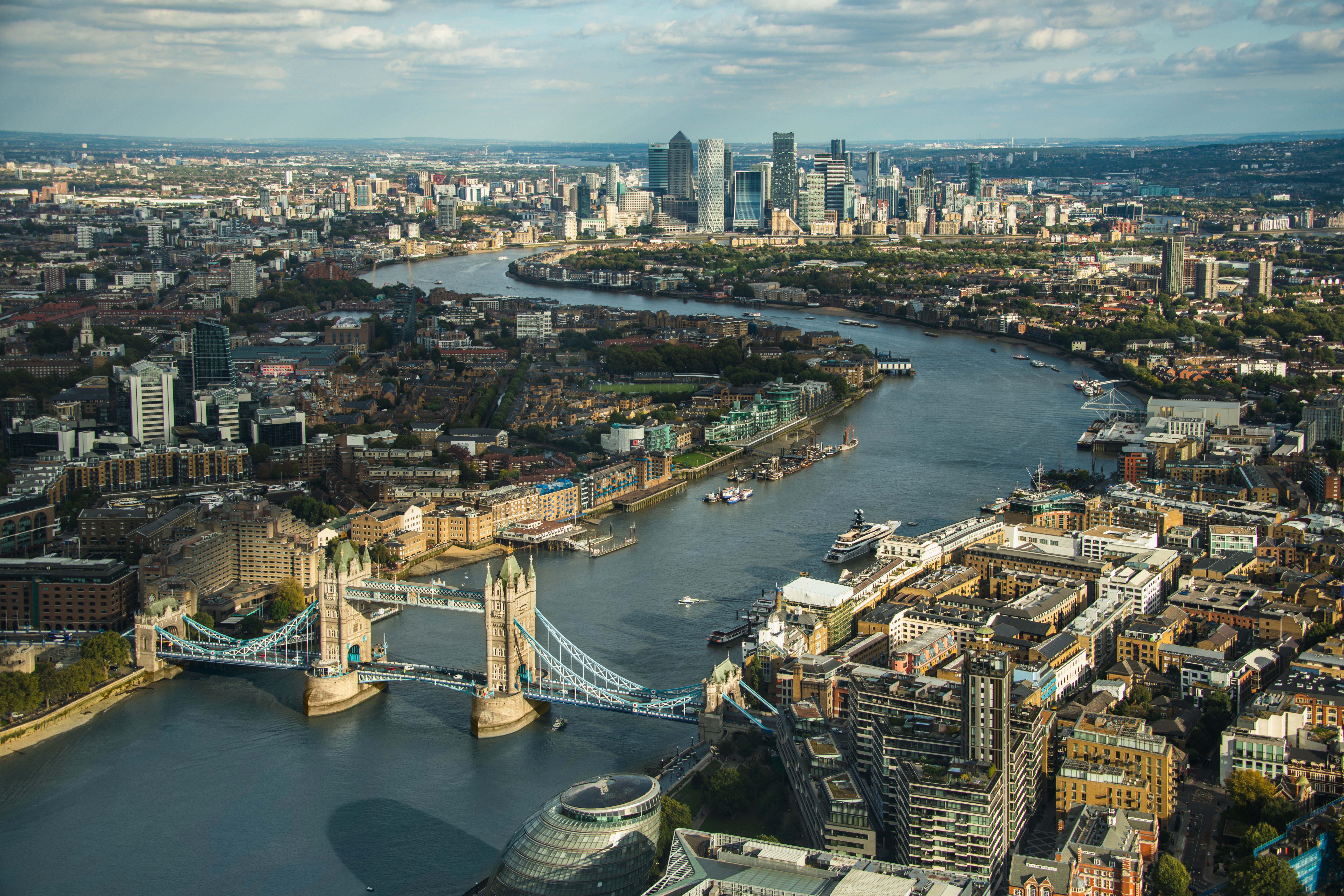
As your cruise pulls up to Tower Bridge (Butler’s Wharf Pier), look up at the beautifully restored brick warehouses. During the 19th century, this area was known as the “Larder of London” because it was the largest warehouse complex on the river, storing vast fortunes of tea, coffee, spices, and sugar from all over the world.
Protruding from the upper stories of these buildings are massive, historic iron overhead cranes. These cranes were used to hoist heavy sacks of cargo directly out of traditional Thames sailing barges bobbing in the water below.
3. Execution Dock & Traitor’s Gate
Where to spot them: The north bank, just east of Tower Bridge.
The Thames has a notoriously dark judicial history. As you pass the Tower of London, you’ll see the water-level archway of Traitor’s Gate, where high-profile prisoners like Anne Boleyn were brought into the fortress by boat.
Slightly further downstream at Wapping lay Execution Dock. For over 400 years, the Admiralty Court used this specific spot to execute pirates, smugglers, and mutineers (including the infamous Captain Kidd in 1701). By maritime law, the bodies of the condemned had to remain tied to the gallows until three consecutive tides of the Thames had washed over them.
4. The Sloping Birthplace of the SS Great Eastern
Where to spot them: The Isle of Dogs (north bank), just before rounding the bend to Greenwich.
As the boat rounds the massive loop of the Isle of Dogs approaching Greenwich, look closely at the shoreline on the port (left) side of the vessel. You will see a massive, sloping timber and concrete structure built into the bank.
This is the historic Millwall ironworks slipway, custom-built by the legendary Victorian engineer Isambard Kingdom Brunel in 1858. It was constructed to launch the SS Great Eastern, an iron sailing steamship that was, by far, the largest vessel ever built at the time. Because the Thames was too narrow to launch such a massive ship conventionally, Brunel had to engineer a system to push the ship into the water sideways.
Plan Your Historic Voyage Down the Thames
Ready to trace the steps of London’s ancient mariners? Whether you want to hop off at Butler’s Wharf to explore the old spice warehouses or cruise all the way from Westminster to Greenwich to explore royal maritime history, we have a route for you.
Route: Westminster Pier ➡️ Embankment Pier ➡️ Festival Pier ➡️ Bankside Pier ➡️ Tower Bridge (Butler’s Wharf Pier) ➡️ Greenwich Pier.
Amenities: Fully accessible vessels, open-air top decks, heated indoor lounges, licensed bars, and live/audio commentary.
👉 Book your Thames River Sightseeing tickets online today and save!