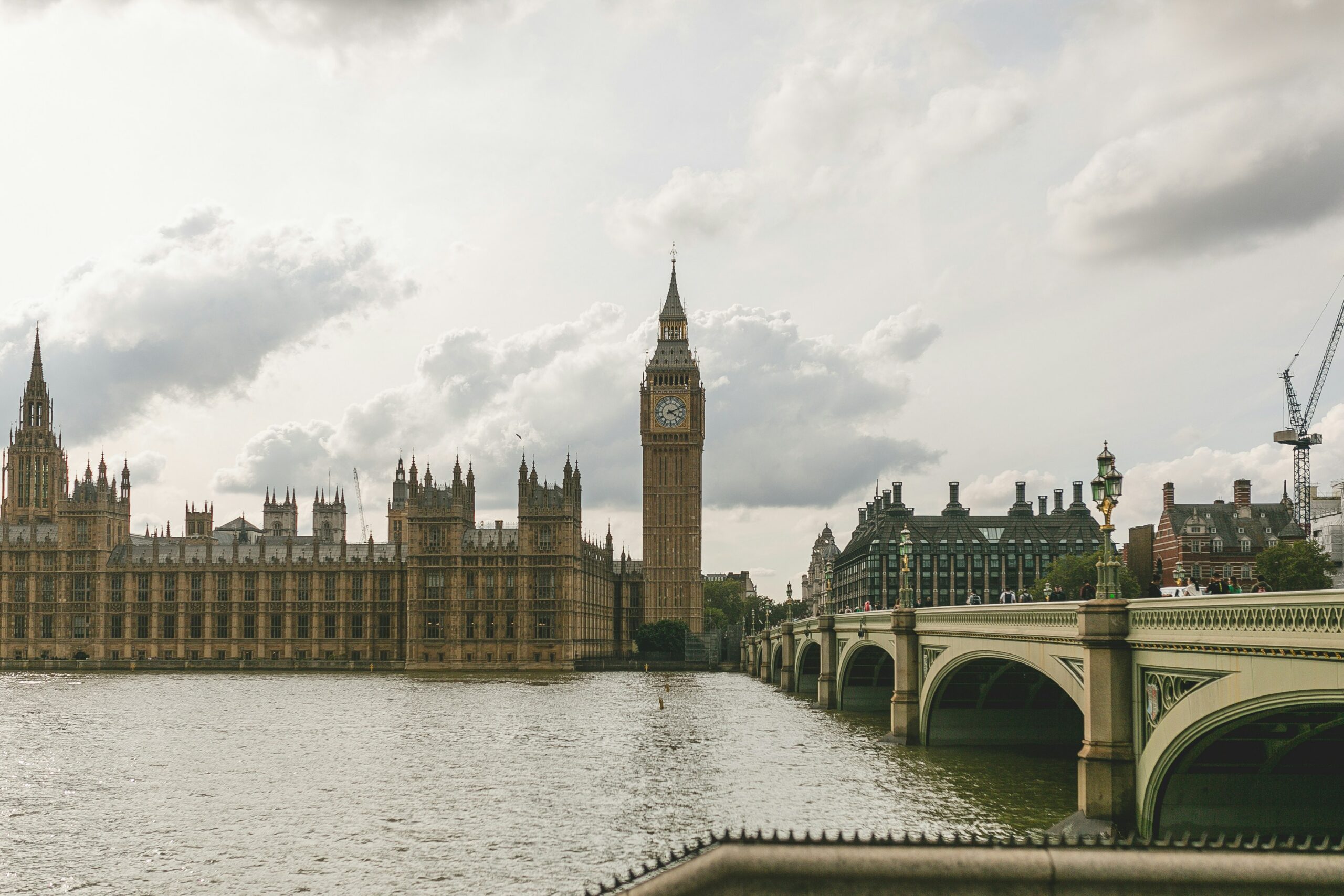
Most people count them without really seeing them. You’re looking up at Big Ben, or scanning the skyline for the Shard, and a bridge slides overhead almost as an afterthought — shadow, then sunlight again. But every one of those bridges has a story stranger, older, or more surprising than the landmarks either side of it. One of them used to be brown. Another was mostly built by women while the men who usually built bridges were away at war. One of them isn’t even in London anymore.
Here’s what you’re actually sailing under on a Thames River Sightseeing cruise, from Westminster to Tower Bridge.
Westminster Bridge
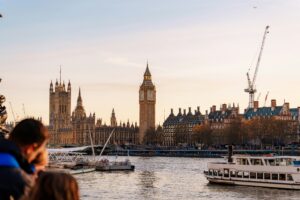
The first bridge you pass, and for centuries the second bridge ever built across the Thames in London — the original opened in 1750, a full 600 years after London Bridge had had the river to itself. The current bridge dates from 1862 and was designed by the same architect responsible for the Palace of Westminster next to it, Charles Barry, which is why the two feel like they belong together. Look closely at the paintwork: it’s green, deliberately matching the leather benches of the House of Commons on the north bank. Cross to the south side and you’ll find Lambeth Bridge painted red to match the House of Lords — the two colours effectively map the building’s own internal geography onto the river.
Hungerford Bridge and the Golden Jubilee Bridges
A railway bridge flanked by two elegant pedestrian bridges, added in 2002 to mark the Queen’s Golden Jubilee. The original Hungerford Bridge was designed as a footbridge in 1845 by Isambard Kingdom Brunel — the same engineer behind the Great Western Railway — before being rebuilt for trains a few years later. It’s easy to miss because it’s not much to look at from the water, but it carries more foot traffic than almost any other crossing in London, linking the South Bank directly to Embankment station.
Waterloo Bridge
Ask most Londoners which bridge has the best view in the city and a surprising number will say this one — not Tower Bridge, not Westminster, but Waterloo, precisely because it isn’t a landmark in its own photos. Opened in 1945, it’s known unofficially as the “Ladies’ Bridge,” built largely by women while the men who would normally have done the work were away fighting the Second World War — a fact that went largely unrecognised for decades. It’s also the bridge immortalised in The Kinks’ “Waterloo Sunset,” one of the most quietly loved songs ever written about London.
Blackfriars Bridge
Painted a distinctive red, Blackfriars gives you one of the clearest sightlines to St Paul’s Cathedral’s dome anywhere on the river. There’s actually been a bridge on this site since 1769, though the current structure dates from 1869. Just alongside it, you’ll also pass Blackfriars Railway Bridge — easy to spot by the ornate red columns rising straight out of the water, all that remains of an earlier Victorian rail bridge that was only partially rebuilt.
Millennium Bridge
The newest bridge on this stretch of the river by a wide margin — and the first entirely new Thames crossing in London in more than a century when it opened in June 2000. It’s pedestrian-only, a striking, low-slung steel structure connecting Tate Modern on the south bank directly to St Paul’s Cathedral on the north. It earned a nickname within days of opening: the “Wobbly Bridge,” after an unexpected swaying motion caused by pedestrians unconsciously walking in step forced it to close for modifications just two days after its grand opening. It reopened, fixed, in 2002, and today it’s one of the most photographed footbridges in the world.
Southwark Bridge
Quieter and less photographed than its neighbours, Southwark Bridge has carried a crossing at this site since 1819, though the current structure is from 1921. It’s one of the five central London bridges included in the Illuminated River project, which lit up the Thames’s bridges with a rotating, tide-synced light display — so if you’re on an evening cruise, this is one to watch.
Cannon Street Railway Bridge
Trains only, and one of the odder names on the river — nothing to do with cannons at all. The area was once home to London’s candlemakers, and “Cannon” is thought to be a corruption of “Candlewick.” Opened in 1866, it carries trains into Cannon Street Station, and its two brick towers on the riverbank, still standing today, once concealed water tanks that powered the station’s hydraulic lifts.
London Bridge
The plainest-looking bridge on the route by design, and also the oldest crossing point on the entire Thames — there’s been a bridge here since Roman London. A medieval stone version lasted 600 years. Its 19th-century successor, designed by John Rennie, became so famous that in 1968 it was sold — stone by stone — to an American entrepreneur and rebuilt in Lake Havasu City, Arizona, where it still stands today, thousands of miles from the river it was built for. The bridge you’ll actually sail under is the 1973 replacement, opened by Queen Elizabeth II, built from concrete and steel rather than stone.
Tower Bridge
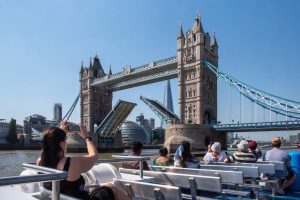
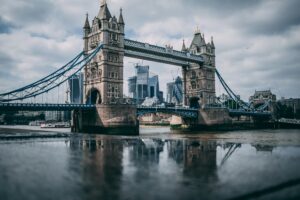
The one everyone’s been waiting for, and the last bridge before Thames River Sightseeing’s route opens out toward Tower Bridge (Butler’s Wharf) and Greenwich. Opened in 1894, it’s a combined bascule and suspension bridge — the two halves of the roadway still lift to let tall ships through, around 800 times a year. It was originally painted chocolate brown; the blue and white colour scheme you see today wasn’t added until 1977, to mark the Queen’s Silver Jubilee. Despite the name, it’s routinely confused with London Bridge by first-time visitors — now you’ll know exactly which is which.